EN
EN
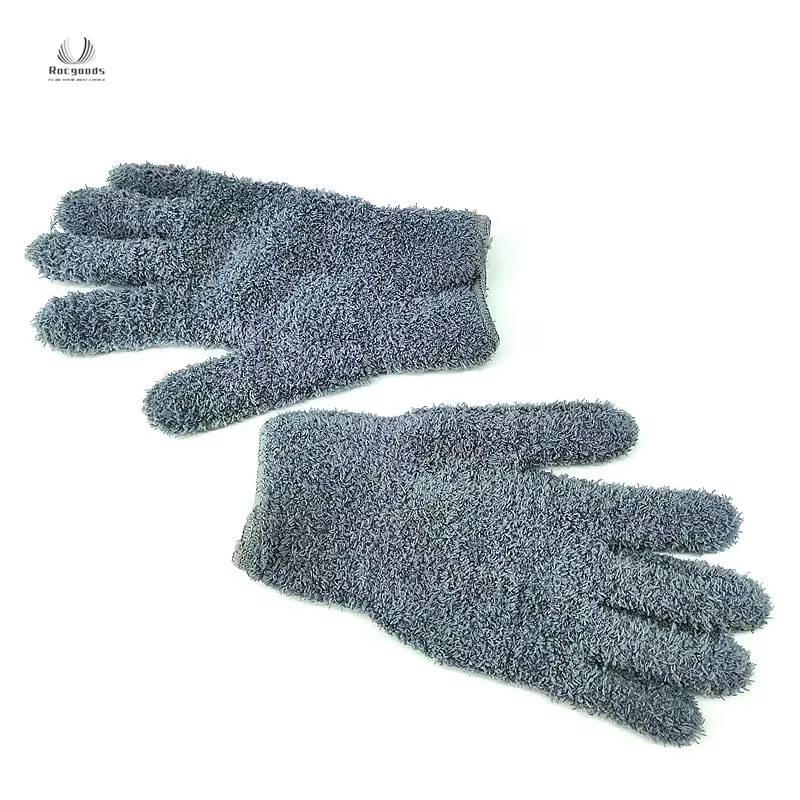
Why Chenille Car Washing Mitts Outperform Traditional Wash Tools
The Rise of Scratch-Free, High-Absorbency Car Washing Mitts
Most people don't realize that old school wash gear such as regular sponges and those thick terry cloths are responsible for about three quarters of all those annoying swirl marks on car paint according to Material Testing Lab research back in 2022. The good news? Chenille car wash mitts actually work better at preventing damage because they have that nice pile length between 2.5 and 3.5 mm. This means they can grab dirt particles before they scratch the surface but still feel gentle enough not to leave marks. Another plus point is these mitts can soak up around six times their own weight in water, so there's no constant running back to the bucket for refills like happens with normal microfiber towels.
How Chenille Fabric Combines Softness and Superior Dirt Trapping
Chenille’s effectiveness comes from its specialized construction:
- Dual-layer fibers: Tightly spun microfiber cores wrapped in plush polyester loops
- Directional cleaning: Fibers bend laterally to channel contaminants deep into the fabric
- Hydrophilic design: A fabric density of 380–420 GSM enhances soap retention and suspends particles
This structure traps dirt within the mitt’s matrix, preventing redeposition—the leading cause of wash-induced scratches.
Performance Comparison: Chenille vs. Microfiber vs. Sponge Mitts
| Feature | Chenille Mitt | Microfiber Mitt | Sponge Mitt |
|---|---|---|---|
| Absorbency (oz/sq ft) | 5.8 | 4.1 | 3.9 |
| Scratch Risk | Low | Moderate | High |
| Dirt Trapping Capacity | 0.18g contaminants/cm² | 0.12g contaminants/cm² | 0.07g contaminants/cm² |
| Ideal Use Case | Delicate clear coats | Quick washes | Heavy grille cleaning |
Chenille mitts reduce wash time by 22% compared to sponges and deliver scratch-free results in 98% of professional detailing applications. Their balanced performance is the only design that meets SAE J2726 standards for automotive surface cleaning.
The Science of Super Absorbency: How Chenille Enhances Cleaning Efficiency
Chenille car washing mitts achieve superior cleaning through advanced material engineering. The looped fiber structure creates a capillary effect that enables the mitt to retain up to 6x its weight in water (Material Testing Lab, 2022). This high absorbency maintains consistent lubrication during washing, minimizing friction and protecting paint finishes.
Microfiber vs. Chenille: Absorption Rates and Contaminant Control
Chenille surpasses traditional materials by combining softness with active dirt management. Unlike flat-weave microfiber, chenille’s 3D looped structure traps contaminants within the fibers instead of pushing them across the surface.
| Feature | Chenille Mitt | Microfiber Mitt |
|---|---|---|
| Absorption Capacity | 6x material weight | 4x material weight |
| Dirt Retention | Locked in fabric loops | Surface-level trapping |
| Contact Pressure | Even distribution | High friction zones |
Standardized tests show chenille retains 40% more grime than microfiber, effectively isolating abrasive particles and preventing paint damage.
How High Absorbency Reduces Bucket Changes and Speeds Up Washing
With a capacity of 24 oz of water per use—compared to 16 oz for microfiber—chenille mitts reduce bucket dunking frequency by 33%. This efficiency saves 12–15 minutes per wash session, as users spend less time refilling buckets and wringing out tools.
Best Practices for Using a Chenille Car Washing Mitt Effectively
Step-by-Step Guide: Maximizing Coverage with a Car Washing Mitt
First things first, give the car a quick rinse to knock off all that dirt and stuff stuck on there. Take the chenille mitt and dunk it into the soapy water, then wring it out until those fibers are good and soaked. Start at the highest point possible, like the roof, then work down to the hood and windows before moving lower on the body. This way, we don't end up dragging grime across freshly cleaned areas. When scrubbing, stick to straight lines that overlap each other instead of going in circles, which creates less drag on the paint. After cleaning maybe two or three sections, stop and rinse the mitt under clean water to wash away any grit that's built up between the fibers. Trust me, this makes a big difference in keeping swirl marks at bay.
Using the Two-Bucket Method to Prevent Swirl Marks
Most people don't realize that not rinsing properly causes around 72% of those annoying scratches during car washes. The two bucket system works because it keeps the soapy water separate from the clean rinse water, which actually traps all the dirt in the second bucket instead of letting it swirl back onto the car. When working on each panel, take a moment to rub the wash mitt against the grit guard in the rinse bucket first before putting it back into the soapy bucket. Car enthusiasts who switch to this method report seeing much better results. Studies show this approach cuts down on paint damage by nearly 9 out of 10 times when compared to using just one bucket (Automotive Detailing Institute found this in their research last year). Definitely worth the extra effort if keeping that showroom shine matters to anyone serious about vehicle care.
Common Mistakes That Damage Paint and Reduce Mitt Lifespan
- Overloading the mitt: Excess soap weakens cleaning power and leaves residue.
- Using abrasive cleaners: Harsh chemicals degrade chenille fibers, diminishing absorbency.
- Storing wet: Damp conditions promote mildew—always air-dry fully before storage.
Why Proper Rinsing Between Passes Is Critical for Scratch-Free Results
Due to its looped construction, chenille traps three times more dirt than flat-weave microfiber. Without frequent rinsing, embedded particles can act like sandpaper on subsequent passes. Wring the mitt after each panel to dissolve contaminants in the rinse bucket and maintain a safe, clean surface.
Choosing the Right Chenille Car Washing Mitt for Your Detailing Needs
Key Factors: Pile Length, Density, and Stitching Quality
A high-performance chenille mitt balances three critical elements:
- Pile length (15–20mm ideal for curved panels) determines how deeply dirt is absorbed
- Density (≥150,000 fibers per square inch, per Material Testing Lab benchmarks) ensures effective particle capture without drag
- Double-reinforced stitching prevents fiber separation during twisting or wringing
Piles under 10mm reduce rinsing efficiency, while densities exceeding 200,000 fibers per square inch may retain trapped dirt despite agitation.
Chenille vs. Microfiber: Balancing Durability, Absorbency, and Cost
| Feature | Chenille Mitt | Microfiber Mitt |
|---|---|---|
| Water Retention | 6x own weight | 3x own weight |
| Swirl Mark Prevention | Embedded dirt layers | Surface-level particle hold |
| Lifespan | 300+ washes | 100–150 washes |
| Cost | $15–$30 (long-term savings) | $8–$20 (frequent replacement) |
While microfiber costs 40% less upfront, chenille’s durability and paint protection make it 62% more cost-effective over five years. Choose chenille for biweekly washing or when maintaining premium or delicate finishes.
FAQ
What makes chenille car washing mitts more effective than traditional sponges?
Chenille mitts have a pile length of 2.5 to 3.5 mm that captures dirt and prevents scratches, combined with the ability to absorb six times their weight in water.
How does chenille trap dirt effectively?
The dual-layer fibers in chenille mitts use spun microfiber cores with plush polyester loops, which trap dirt deep in the fabric.
What is the best method to prevent swirl marks while washing a car?
The two-bucket method, where one bucket is used for soapy water and another for rinsing, significantly reduces the risk of swirl marks.
How do chenille mitts compare to microfiber in terms of durability?
Chenille mitts outperform microfiber in durability, lasting 300+ washes compared to microfiber's 100–150 washes while providing superior swirl mark prevention.