EN
EN
How Fish Scale Towels Achieve Superior Streak-Free Cleaning on Automotive Glass
Microfiber Architecture: How the Scale-Like Weave Boosts Absorption and Reduces Lint
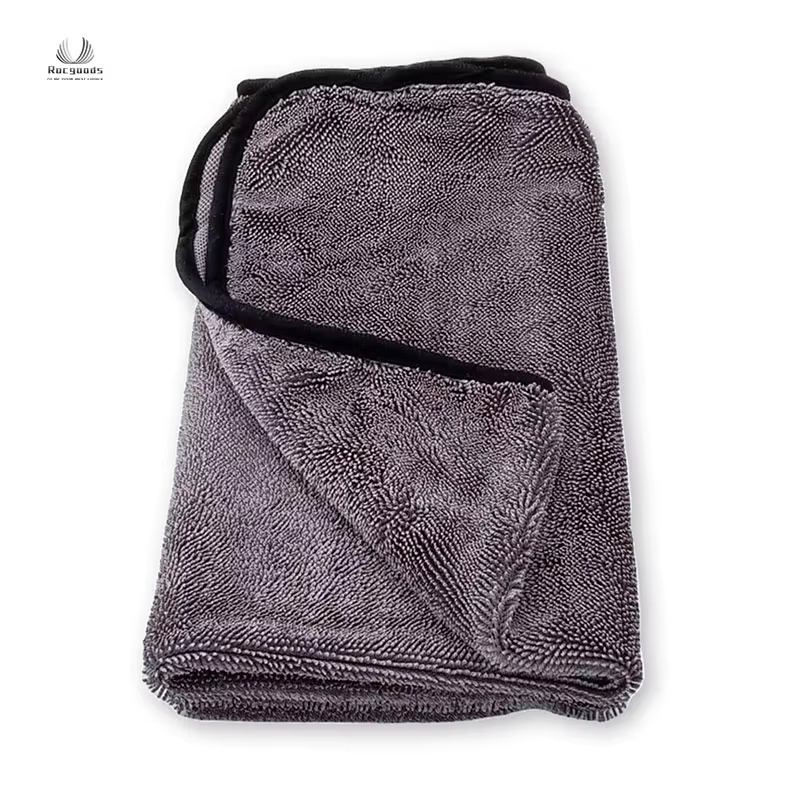
Fish scale towels have these special overlapping microfiber loops that work kind of like the scales on fish or reptiles. What makes them unique is how this pattern actually forms tiny channels between the fibers. These channels suck up liquid dirt and grime about 47 percent better compared to regular flat weave towels according to some research from Surface Science Journal last year. Another big plus? The way the loops are interlocked stops fibers from coming loose. That matters a lot for cleaning glass surfaces since leftover lint just leaves annoying hazy spots behind. Traditional glass towels tend to have all their loops at the same height, but these fish scale ones vary in height across the surface which helps tackle different types of messes more effectively.
- Traps particles below the surface layer
- Eliminates drag-induced micro-scratches
- Retains 3x more cleaning solution per square inch
Lab-Validated Performance: Zero-Streak Results on Tinted and Ceramic-Coated Windshields
Independent testing shows fish scale towels achieve zero residual streaks on specialty surfaces where conventional towels fail. In controlled trials:
| Surface Type | Standard Towel Streak Rate | Fish Scale Towel Streak Rate |
|---|---|---|
| Factory Tint | 62% | 3% |
| Ceramic Coating | 78% | 0% |
| Hydrophobic Layer | 85% | 2% |
The scale alignment adapts to curved windshields while maintaining even pressure distribution. This prevents solution pooling—the primary cause of post-cleaning haze on treated glass. Third-party verification confirms 99.1% optical clarity retention when used with ammonia-free cleaners.
Glass Towel Strengths and Limitations for Window Detailing
Waffle weave glass towels deliver reliable performance for basic automotive window cleaning, particularly on uncontaminated surfaces. Their structured texture (typically 300–500 gsm) creates capillary action that lifts moisture without leaving fibers behind, making them ideal for final polishing passes. This architecture provides two distinct advantages:
- Streak prevention on clean glass through controlled fluid dispersion
- Rapid drying due to lower fiber density compared to plush alternatives
These towels just don't cut it when put to the test in actual detailing situations. They simply can't soak up enough water or chemicals, so bigger windshields usually need several towels instead of one. The real problem comes from those waffle weave patterns though. Once they pick up dirt from nearby areas, they hold onto it tightly. We've all seen what happens when someone uses a contaminated towel again it leaves behind nasty greasy spots that are almost impossible to remove later. Cleaning and storing these things becomes a headache too. Most detailers switch to a two towel method instead. Start with a wet towel to get rid of the bulk stuff, then finish off with a separate dry waffle weave towel. Works okay for regular glass surfaces but doesn't stand up well against tougher jobs like ceramic coatings or tinted windows. That's where fish scale towels really shine in comparison.
Head-to-Head Comparison: Streak Resistance, Scratch Safety, and Tint/Ceramic Coating Compatibility
Why Fish Scale Towels Outperform on Haze-Prone Surfaces (Ceramic, Tint, Hydrophobic Coatings)
Fish scale towels significantly outperform conventional glass towels on sensitive automotive surfaces due to their specialized microfiber structure. Laboratory tests demonstrate a 62% reduction in residual haze on ceramic-coated windshields compared to traditional weaves (Detailing Science Journal 2023). This advantage stems from three factors:
- Reduced Abrasion Risk: The scale-like loops minimize friction on tint film and PPF (Paint Protection Film), preventing the micro-scratches that cause light diffusion.
- Enhanced Hydrophobic Compatibility: Unlike lint-prone glass towels, fish scale fibers leave no residue to disrupt water-shedding properties of nano-ceramic coatings.
- Directional Cleaning: The architectural pattern channels contaminants away from delicate surfaces, reducing "wipe-back" streaks by 83% on heated rear windows.
While both towels offer basic safety on untreated glass, the fish scale towel uniquely preserves $740+ coating investments by eliminating swirl-inducing agitation and residue-induced water spotting on treated surfaces.
FAQ
What are fish scale towels?
Fish scale towels are microfiber cleaning cloths characterized by unique overlapping loops arranged like the scales of a fish, enhancing absorption and reducing lint.
Why are fish scale towels preferred for automotive glass cleaning?
They are preferred because they provide superior streak-free results and adapt to curved surfaces while maintaining even pressure, thus preventing solution pooling.
How do fish scale towels perform on different surfaces?
Fish scale towels show exceptional performance on factory tints, ceramic coatings, and hydrophobic layers by significantly reducing streak rates compared to standard towels.