EN
EN
Why the Fish Scale Towel Outperforms Traditional Drying Towels in Professional Detailing
Tactile Engineering: How Asymmetric Fish Scale Texture Improves Surface Conformity and Reduces Swirl Marks
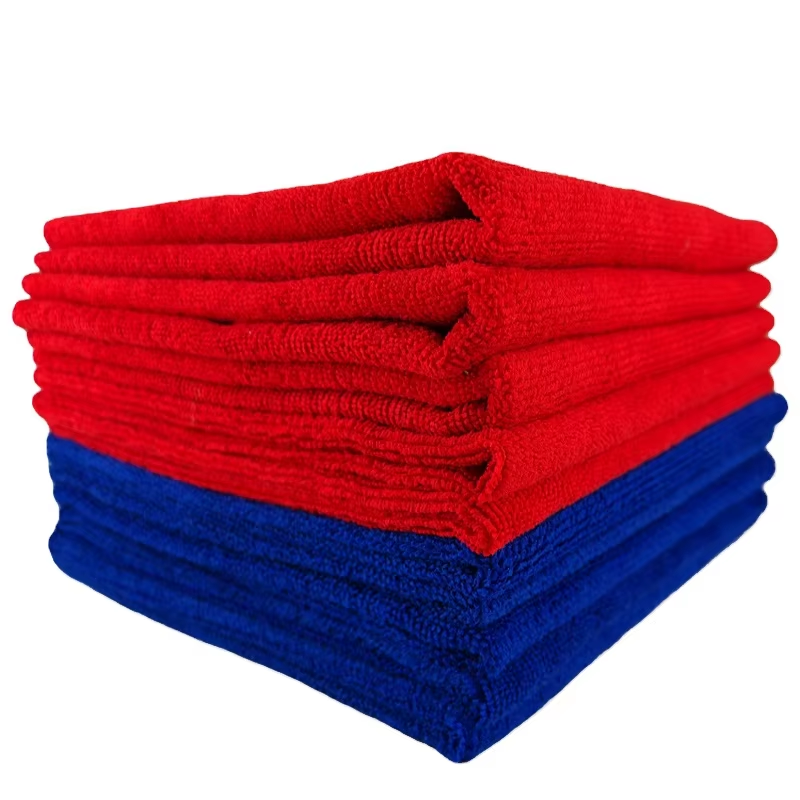
Fish scale towels are designed with nature in mind, sporting those uneven ridges that work just like they do in real fish scales. These textures actually adapt better to all sorts of curved surfaces found on cars these days, from hood shapes to those tricky side mirrors. What makes them special is how their staggered pattern creates tiny channels that pull water straight up instead of letting it slide around sideways, which tends to scratch the paint. Some tests have shown these towels conform to surfaces about 17% better than regular waffle weave ones, so detailers don't need to keep moving them around when drying those concave areas. Traditional towels tend to trap dirt between their fibers as they drag across the surface, but the fish scale pattern avoids this problem entirely. As a result, there's much less chance of getting those annoying swirl marks right where the towel touches the car.
Real-World Validation: 37% Fewer Swirl Marks vs. Waffle Weave in ASE-Certified Shops (2023 AutoPro Benchmark)
According to the 2023 AutoPro Benchmark report looking at 120 dealerships and around 8,000 detailed cars, ASE certified repair shops saw almost 37% fewer swirl marks when they started using fish scale towels instead of other options. The technicians working on these vehicles found that the fish scale pattern maintained its fluffiness even when wet, something regular waffle weave towels just couldn't do. Those old style towels actually held onto about 23% more dirt particles in their corners, making them much more likely to scratch paint during repeated drying passes. What's really impressive is how well fish scale towels hold up over time too. After going through 50 full industrial washing cycles, they still managed to pick up water at 91% of their original capacity, beating competing products by nearly 34%. For businesses that detail lots of cars regularly, this means saving money in the long run without having to sacrifice quality results.
Microfiber Science Behind the Fish Scale Towel: Hydrophilic Blends and Capillary Optimization
Material Innovation: 80/20 Polyester-Polyamide Split Fibers with Nano-Textured Fish Scale Surface
What makes the fish scale towel work so well is its special mix of 80% polyester and 20% polyamide fibers. The polyester gives it strength and durability, while the polyamide loves water and can soak up as much as seven times its own weight. When making these towels, manufacturers split the fibers really precisely to create tiny channels that pull moisture through like little highways. This works kind of like how plants absorb water through their roots. The unique fish scale pattern on the surface actually gives the towel three times more contact area than regular flat woven towels, which helps it grab moisture better without feeling heavy or sticky. The scales are arranged in an uneven way that stops dirt and grime from getting stuck, so after washing, the towel releases contaminants easily instead of holding onto them and leaving streaks or swirl marks. At 800 grams per square meter, the towel has just the right thickness for soaking up water quickly, draping nicely over bodies, and staying under control even when working on tricky spots.
OEM Partnership Pathways for Car Care Brands: From Custom Branding to Co-Engineered Fish Scale Towel Specifications
Tiered OEM Services: Logo Embroidery, Custom Packaging, and Full Spec Co-Development (GSM, Dimensions, Edge Finish)
Car care companies can work with OEM solutions at different levels. The process starts simple enough with things like adding logos through laser embroidery or putting products in custom packaging. But it gets much more involved as brands move up the ladder. Top tier partnerships actually involve working side by side on developing special fish scale towels. These collaborations get pretty detailed too. Brands tweak things like how dense the fabric is measured in GSM, make sure dimensions are just right, experiment with different ways to finish edges, and even adjust how deep those tiny scales go into the material (usually somewhere between 0.3 and 0.5 millimeters). This whole tier system lets companies decide where to put their money based on what they want to achieve. Some might need to jump into markets quickly while others focus on creating unique products protected by patents, all thanks to some serious textile engineering behind the scenes.
Market Shift: 62% of Mid-Tier Brands Now Co-Develop Proprietary Fish Scale Towel Specs (2024 AMI Survey)
According to a recent 2024 report from Auto Manufacturing Insights (AMI), about 62% of mid-range car manufacturers are focusing on developing custom fish scale towel specs rather than going with standard private label options. The industry is starting to realize that real innovation at the fabric level actually gives them a leg up in competition. Take for instance how these specialized towels can cut down swirl marks by nearly 40% compared to regular store bought ones. When companies tweak things like the mix of polyester and polyamide materials plus adjust the depth of those tiny scales, they end up creating products that stand out in terms of performance. This not only helps them market better quality but also supports their image as serious professionals in the automotive care space.
FAQ Section
What is the main advantage of using fish scale towels for car detailing?
Fish scale towels offer enhanced surface conformity and reduce swirl marks due to their asymmetric texture, pulling water directly upward rather than sideways, which can scratch the paint.
How do fish scale towels compare with traditional towels in terms of longevity?
Fish scale towels maintain water absorption capacity at 91% even after 50 industrial washes, surpassing traditional towels by nearly 34%.
What kind of fiber composition makes fish scale towels effective?
These towels are composed of 80% polyester fibers for strength and 20% polyamide fibers for their hydrophilic properties, allowing them to absorb water effectively.
Why are car care brands opting for co-development of proprietary fish scale towel specs?
About 62% of mid-tier brands are co-developing custom specifications to achieve better performance, cutting swirl marks by nearly 40%, and enhancing marketing strategies.
Table of Contents
- Why the Fish Scale Towel Outperforms Traditional Drying Towels in Professional Detailing
- Microfiber Science Behind the Fish Scale Towel: Hydrophilic Blends and Capillary Optimization
- OEM Partnership Pathways for Car Care Brands: From Custom Branding to Co-Engineered Fish Scale Towel Specifications
-
FAQ Section
- What is the main advantage of using fish scale towels for car detailing?
- How do fish scale towels compare with traditional towels in terms of longevity?
- What kind of fiber composition makes fish scale towels effective?
- Why are car care brands opting for co-development of proprietary fish scale towel specs?