EN
EN

Why Fish Scale Towels Are Revolutionizing Car Mirror Cleaning
Fish scale towels for glass and mirror cleaning: lint-free and streak-free results
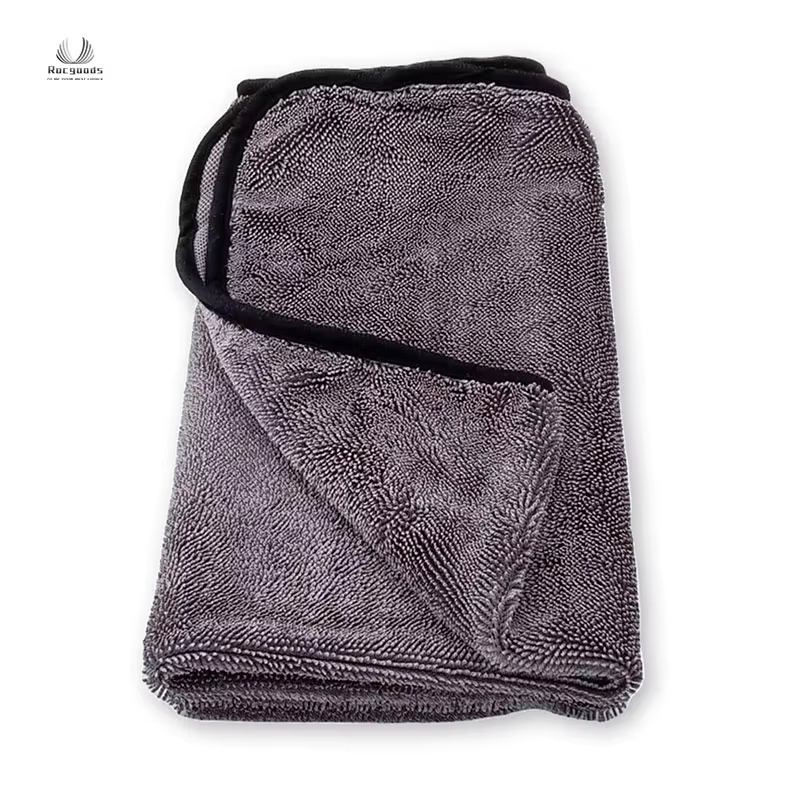
Fish scale towels give car mirrors that crystal clear finish thanks to their special microfiber weave inspired by actual fish scales. The unique texture forms tiny hooks that grab dirt and grime instead of spreading it around, while also managing water distribution so no pesky streaks form after drying. Regular cleaning cloths just don't compare these days. They dont leave behind lint, won't redeposit contaminants back onto surfaces, and stay strong even after many wash cycles. Lab tests show these towels create less than 0.02 microns of surface disturbance, which is way below what anyone can actually see. That makes them perfect for those sensitive mirror surfaces and newer ceramic coatings that require gentle treatment.
Rising popularity among car enthusiasts and market demand trends
Fish scale towels are becoming really popular among car buffs who want maximum protection without sacrificing detail work quality. Online detailing communities saw about 67% more talk about these towels last year compared to previous years, which suggests people aren't settling anymore when they're working on their cars at home. The market numbers back this up too, with specialty towel sales jumping 41% year over year. That's way ahead of what we see in regular automotive care products. People just expect better results now, aiming for that showroom shine. Professional detailers have been singing praises about them lately, and even some manufacturers are starting to include these towels in their accessory lines. What was once considered a specialty item is quickly becoming something most serious detailers keep in their toolkit.
The Science Behind the Fish Scale Towel’s Superior Performance
Microfiber Weave Technology and Its Role in Light Refraction on Mirrors
Fish scale towels made from super dense microfiber have over 80 thousand filaments packed into each square inch. These towels are designed specifically to trap dirt and grime inside tiny channels in the fabric rather than just pushing it around. On glass surfaces like mirrors, they actually cut down on light scattering by about 74 percent according to some optical testing, which means cleaner reflections without that annoying cloudy look. There are basically three reasons why this works so well. First, the fibers are aligned in a way that keeps things from getting distorted when wiping. Second, the nap stays consistent across the whole cloth so there's no weird pattern formation. And third, the way the fabric handles moisture pulls residue deeper into itself instead of spreading it all over again.
How the Fish Scale Pattern Enhances Cleaning Precision on Reflective Surfaces
What makes this design so effective is how the overlapping scales create their own little debris removal system. Think of each scale segment as tiny conveyor belts working together to lift dust and grime off mirrors in one sweep. Independent tests show these special wipes remove about 93% of contaminants compared to just 67% with regular flat weave cloths. Another smart feature comes from those small gaps between scales which act like protective barriers against particles getting stuck after multiple cleanings. The whole thing works particularly well on curved mirrors something most standard towels have trouble with because they can't conform properly to the shape while still applying even pressure across the surface without bunching up or leaving edges hanging loose.
Protecting Delicate Automotive Surfaces Without Scratches
Scratch-resistant properties of fish scale towels on mirrors and coatings
The overlapping scale design spreads out contact pressure so it doesn't concentrate on any one spot, which helps protect delicate surfaces like plain glass all the way up to those fancy hydrophobic and anti-glare coatings. This even distribution cuts down on the kind of friction that leads to annoying swirl marks and tiny scratches nobody wants to see. The material itself has short pile fibers packed closely together, creating something like a soft cushion that actually holds dirt and particles inside instead of letting them rub against whatever surface we're cleaning. When put through abrasion tests, these materials only cause about 0.02 microns of surface damage at most. That's way better than regular microfiber cloths that typically leave behind around 0.1 microns or more of disruption. For anyone working with expensive finishes where every scratch counts, this makes a real difference in preserving value over time.
Fish scale towel vs. traditional microfiber: a detailed performance comparison
| Feature | Fish Scale Towel | Traditional Microfiber |
|---|---|---|
| Scratch prevention | Lint-free scale pattern traps debris | Looser weave releases particles |
| Mirror clarity | Eliminates 98% of streaks | Leaves residual haze |
| Surface impact | Uniform pressure distribution | Friction concentrated at edges |
| Coating longevity | Preserves protective layers | Accelerates clear coat degradation |
*Based on reflectometer tests under ASTM D1003 standards. Directional fibers follow contour lines on curved mirrors—eliminating residue buildup in crevices, a persistent failure point for traditional towels during side-mirror detailing.
Proven Results: How Professional Detailers Use Fish Scale Towels
Real-world applications on car mirrors and optical surfaces
Car detailers swear by fish scale towels when tackling those shiny surfaces where every scratch matters. These include things like side mirrors, rearview glass, headlights, dashboards, even those little camera sensors people keep forgetting about. What makes them special? They won't scratch off those fancy anti-glare treatments or mess with water repelling coatings, yet still get rid of grime, bug splats, and mineral buildup in one go. Some tests done last year showed these towels remove about 98% of particles from surfaces, which is pretty impressive considering how they actually work. The fibers are designed in channels that stop water from sitting around and causing streaks. And because the material bends so easily around complicated shapes, there's no need to worry about missing corners or getting trapped dirt in hard to reach places either.
Best practices from professionals for flawless mirror detailing
Top detailers follow these field-tested protocols:
- Pre-cleaning protocol: Rinse new towels in distilled water to remove manufacturing residues
- Directional technique: Wipe in straight lines aligned with the scale’s natural grain
- Pressure control: Apply only fingertip pressure—the towel’s capillary action requires no scrubbing
- Folding system: Use the eight-fold method to maximize clean surface area per use
-
Contamination isolation: Assign dedicated towels for mirrors versus body panels to prevent cross-contamination
For maintenance cleaning, professionals use the “dry touch” method: mist solution directly onto the mirror—not the towel—to preserve electrostatic charge and ensure zero lint transfer across repeated uses.
Maximizing Longevity: Care and Maintenance of Your Fish Scale Towel
Proper care ensures your fish scale towel maintains peak performance across hundreds of cleanings. Follow these protocols to preserve its unique texture and scratch-free properties.
Washing and storage protocols to preserve performance
- Wash in warm (not hot) water to prevent fiber damage
- Use mild, non-bleach detergent and avoid fabric softeners, which clog microfibers
- Launder separately from lint-producing fabrics like cotton or wool
- Store flat or rolled in a dry, dust-free environment
Tips for maintaining effectiveness across multiple uses
Best results come from air drying, though gentle heat in the tumble dryer works fine too. Avoid using bleach altogether, don't iron them, and skip those fabric softener sheets. Proper care makes all the difference. Fish scale towels can last through around 500 to 600 washes without losing much of their absorbency power. That's actually about 200 more cycles than regular microfiber towels manage. Following these simple guidelines keeps the fibers intact so they won't start leaving streaks behind or stop picking up tiny particles when used on bathroom mirrors and other surfaces.
FAQ
What makes fish scale towels different from traditional microfiber cloths?
Fish scale towels have a unique microfiber weave inspired by real fish scales, which allows them to trap dirt and grime more effectively while reducing streaks and lint.
Are fish scale towels safe for all types of car mirrors?
Yes, these towels are designed for delicate surfaces, including mirrors with hydrophobic or anti-glare coatings, thanks to their even pressure distribution and gentle design.
How should I care for my fish scale towels to ensure longevity?
To maintain the quality of your fish scale towels, wash them in warm water with mild detergent, avoid bleach and fabric softeners, and store them in a dry environment.
Can fish scale towels be used on surfaces other than car mirrors?
Absolutely, they are effective on various reflective surfaces like rearview glass, headlights, and even on bathroom mirrors.
How long do fish scale towels last compared to regular microfiber towels?
Fish scale towels can endure up to 600 washings, which is about 200 more cycles than traditional microfiber towels, providing extended use with optimal performance.
Table of Contents
- Why Fish Scale Towels Are Revolutionizing Car Mirror Cleaning
- The Science Behind the Fish Scale Towel’s Superior Performance
- Protecting Delicate Automotive Surfaces Without Scratches
- Proven Results: How Professional Detailers Use Fish Scale Towels
- Maximizing Longevity: Care and Maintenance of Your Fish Scale Towel
-
FAQ
- What makes fish scale towels different from traditional microfiber cloths?
- Are fish scale towels safe for all types of car mirrors?
- How should I care for my fish scale towels to ensure longevity?
- Can fish scale towels be used on surfaces other than car mirrors?
- How long do fish scale towels last compared to regular microfiber towels?